Nike, Boston and Pace Shaming in Running
This is not the blog I initially had planned as my reemergence from my self-imposted hermitage. Hell, I wasn’t planning to say anything on the subject but here we are.
Nike and the Boston Marathon.
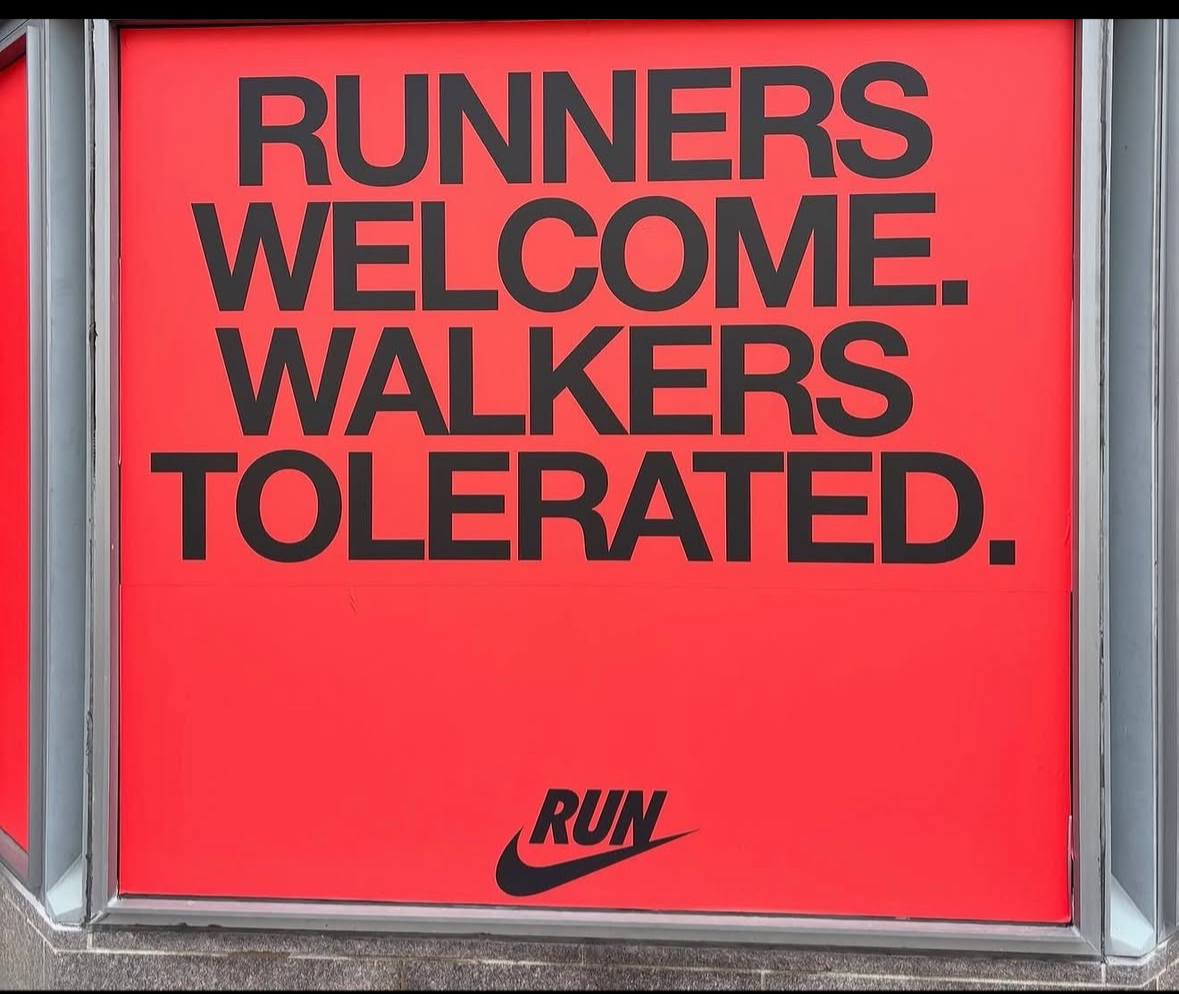
Then I started seeing more and more social media posts. Part of them made me twitch sideways but most of them brought the best tears to my eyes. If you are not familiar with the Nike bullshittery, they had a sign in their Boston storefront saying “Runners Welcome. Walkers Tolerated.” There was an immediate and negative backlash which led to the sign being removed. Before I go further, I do not encourage cancel culture and frankly, it annoys me. Not every pushback is a demand for something to be cancelled, sometimes it is people saying “WTF, that was a shitty take.” Nike did not get cancelled, they got called out and it was corrected.
So if I do not believe in cancel culture or mob mentality, why am I twisted in my axle sideways about this?
Pace Shaming
The Boston Marathon is viewed as one of the foremost pinnacle events in running. Many runners train for YEARS to qualify. Runners can miss qualifying by hundredths of a second and it is heart-wrenching. A person can run qualifying time for Boston but still not qualify once the official cutoff is announced. For some, running Boston is a lifelong dream and goal.
Let’s go through some rough numbers and data points. Approximately 1% of the population has completed a marathon. The Boston Marathon field is about 30,000 runners. Around 6,000 entries are non-qualifiers, meaning charity, sponsor, or invitational. That means about 1 in 5 runners are not there based on time standards. So right out the gate, pun intended, the idea that this is an “elite runners only” event is false. To participate with a charity bib, a runner is required to raise a minimum amount. That amount varies by charity and can range from $5,000 to $15,000…JUST TO PARTICIPATE, just to get the chance to line up at the start. Overall, the Boston Marathon raises between $40-50 MILLION annually. This is millions of dollars going towards charities that support health care, veterans, cancer research, community programs, and more.
Boston has some mind-blowing elite runners but it also has a fuck ton of heart. Participants range from 18-80+ years old, over 150 people have run Boston 25+ years in a row. Do you know what all of these people have in common? They ran the same course. They had the same start line. They had the same finish line. The difference? Their pace. We glorify speed, and I am not mad at it. There are some runners in both road and trail running that are exciting to follow. That are breaking records and inspiring others. Staying in the sport though, whether you are an elite athlete PAID for your performance, a turbo that your run club loves, or your average Jane and Joe, requires adaptability, humility, and letting go of your old pace without quitting all together. And I can tell you first hand, that last one is hard.
The running community likes to pride itself on inclusivity, welcoming people of all shapes, sizes, and speeds but Nike just told a majority of the population that they were merely tolerated. People with comeback stories, transformations, proving to themselves that they can do hard things. Struggling with slower paces and walking. There are many, like myself, struggle with calling ourselves runners. Why? Because our running doesn’t look like the others that are highlighted. The elite runners, the qualifiers. We are slower. Sometimes we run, sometimes we shuffle, sometimes, we walk, hell, we even crawl but we are still going. In our lives, we deal with aging, injuries, life changes. They still show up. Does that make them any less of a runner? No. I don’t say this as a salty slower runner either. When my running journey started, I went from struggling to make it a mile, to placing in the top 9% of women in the San Francisco Bridge to Bridge, tied for first in the base 10k, and now, I am grateful that I can still walk, let alone run, after a near death experience.
Outside of Nike’s distasteful sign, there were runners telling other runners to not be so sensitive about “walkers tolerated” if they can’t qualify. Yes. Fellow running community members pace shaming. Saying that runners are getting soft. Sadly, people new to the sport will see this and feel discouraged, feel like they don’t belong. They tell themselves that once they get faster, then they will sign up for the event. Let me tell you something many won’t talk about. How hard it is to get to the finish line as a slower runner than a fast runner. Your headspace and emotions go to some dark places. You are tired, discouraged. You question if you can do this. You know that people are already done and having a celebration meal. But here you are still going. Is that person, fighting their inner demons but still putting one foot in front of the other, only tolerated? No, those are the ones we should cheer the loudest for.
And that is my favorite part of social media after the Boston Marathon. Roughly, a half a million people show up to cheer, support, and celebrate EVERYONE crossing that finish line. Not just the fast ones. Lan Nguyen scooted the last mile due to injury. Runners helping fellow runners get across the line versus letting them quit. Picking them off the ground. People participating to honor a lost loved one. Amputees. Paraplegics being pushed in wheelchairs. All deserving of that finishers medal.
The running community deserves better. It deserves better people that won’t tear others down and better messaging. We don’t have to pretend pace doesn’t exist. We don’t have to give up qualification standards. However, the version of running only counts when it looks fast, that isn’t protecting the sport or fun, snappy marketing. That is shrinking it. A runners worth is not attached to their pace. Being fast or slow doesn't make you more or less of a runner. I won't bullshit you and say that I haven't struggled with this myself. Our running paces may be different, but we all have a reason why we run. We run for movement. We run for our mental health. We run to meet friends. We run to eat epic cookies. We run because it lights us up.
If your identity has been built on doing more, pushing harder, and proving your worth…
of course slowing down feels uncomfortable. But you don’t need to earn your value by suffering faster. If you’re ready to break that cycle for real, book a Freedom Formula call.
Email me at [email protected]
And Remember
YOU MATTER
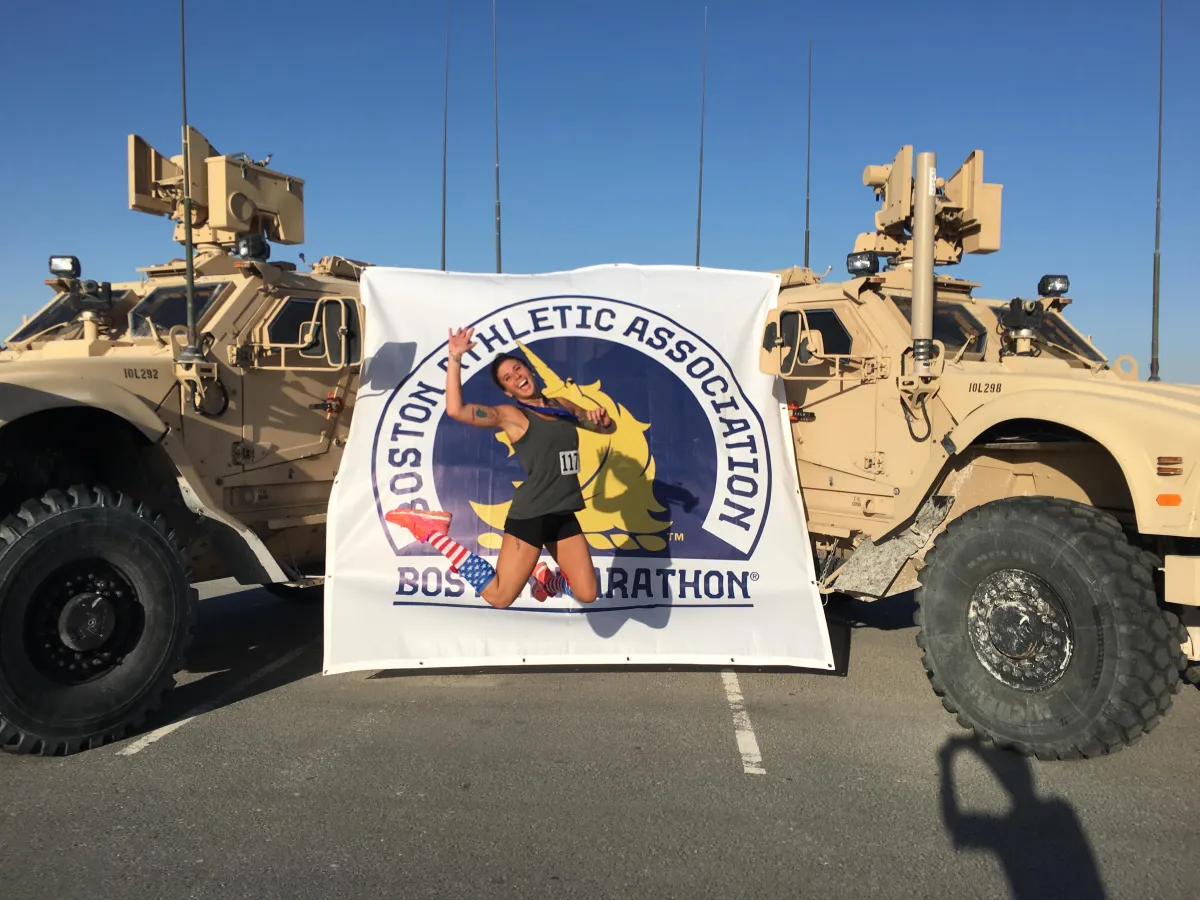
**disclaimer... I did not run the Boston Marathon. This was a shadow event held on Al Udeid Air Base**
